The main feature of Pokémon is the battles. Whether it’s the games, anime or manga medium, it is the main attraction. People resolve differences through yelling at their creatures to defeat the other, and even the Pokémon seem happy about it.
But sometimes the system on which battling works upon appears strange. We can accept that a Squirtle will beat Charmander – after all, Water beats Fire. And Pikachu is great to have when going into Misty’s gym. Making sense of some of the stranger relationships however can require some abstract thinking. Why can Bugs beat Psychics? Ice struggles against Water, but not the other way around? And what’s the deal with Fairy types? This article is an attempt to explain the logic behind some of these (or at least point out how odd some typing relationships are), and even provide a background to the newest type of them all, the Fairy type.

We can’t explain this logic, however. No Ash, Electric types can’t hurt Ground types!
To begin with, let’s revisit the sorts of interactions that exist. You have neutral ones – that is, attacks that won’t be stronger or weaker than normal. An example is a Fighting type move against a Water type, or Fire against Normal. This is followed by super-effective relations – Water beats Fire, which beats Grass, which beats Water. The opposite is the not very effective relations. These often exist in the the opposite way to super effective (Water doesn’t do much damage to Grass), but not always (while Fighting beats Normal, Normal is neutral against Fighting). Lastly, there are the non-effective relations. Earthquake all you want against a Flying type, it won’t do a thing.
With 18 types now, there are 182 type relations, or 324 of them, ignoring dual types. The majority would be a waste of time to think about too deeply, so here are what we thought were the weirder or more interesting of the bunch.
Normal and Ghost
This is a unique relationship where both types have no effect on each other, ignoring the use of moves such as Foresight. This odd fact alone is worthy of a mention. Nothing else after all is immune to Ghost types, but Fighting type moves also fail to land a scratch on Ghosts. The reasoning isn’t quite clear . Ghost being unaffected by purely physical attacks makes sense, and that’s how you would describe the Normal Moves (Tackle, Quick Attack, Body Slam). But Ghosts unable to affect Normal types? Maybe they are so ‘unremarkable’ or lacking in mastering an actual element or skill, or style of battling – even something that Fighting types have – that Ghost types simply cannot manipulate, and hence affect, them.
Flying Types
Flying has a bunch of odd relationships. After all, have you ever tried to punch a bird?
Flying types are synonymous with birds – in fact, Bird was the original name for the type, as shown in the infamous Missingno using filler data in the games. So it makes sense that they have an advantage over Bug types. They meanwhile suffer hits from Rock types (as the comic mentions, ‘two birds with one stone’ is a fitting mnemonic). Electricity and Ice being weaknesses however requires a bit of reasoning. Falkner suggests that people say that you can clip the wings of Flying types with a jolt of Electricity, and electrocution is a factor of many bird deaths by either lightning or electrical wires. And being frozen is never nice while a number of bird species migrate to avoid the winter in the first place – but why is this more significant than say Electric or Ice against Fighting types, or Bug? They also wouldn’t appreciate being zapped or frozen. Birds also won’t like being set on fire, so what’s the deal there?
The answer may be the thing that sets Flying Types apart from any other – their ability to fly (after all, Ground types fail to affect them for a reason, even if logically a Mud Slap should be able to hit them if aimed well enough). That is, Flying types rely on mobility. From moves like Fly and Brave Bird which require significant movement of the whole body of the Pokémon, to others such as Whirlwind, Gust, Air Cutter, Air Slash, and so forth which also needs a fair bit of effort exerted (such as by the Pokémon’s wings). Take away the ability to fly from such a Pokémon, and there goes their ability to do anything, including stay airborne. So really, Electric and Ice types are really just good at stopping Flying types from flying rather than fainting them, and this is why they’re super effective.
This in a way helps explain why Flying types are strong against Grass and Fighting types. The advantage they hold against them is their mobility. Grass types tend to be less mobile creatures which are tied to the ground. And one can argue that those which bear fruit or grains also would fall prey to some Flying types. Fighting types meanwhile need to be able to hit their opponents, and they rely on this more so than other types which are known more for their ability to hit targets from close range – and a lot of the Fighting types are stuck on the ground. So you can say it really is hard to punch a bird.

This Medicham did not know Thunder or Ice Punch.
Water’s Advantages
There are two oddities for Water types – the fact that they have an advantage over Ground types, yet the reverse is a neutral relationship; and are also neutral against Ice types, yet resist them when defending. Usually if something resists a type it’s also super effective against it when attacking, yet Water has two exceptions. But at least one can be explained.
Ground types have ties to rock (just look at the number of Rock/Ground types about) and can be thought to suffer erosion from water types, or even ‘turn to mud’ and become sluggish, as what when happen when you apply water to dirt. But their attacks can’t really be thought to be resisted more by Water types than others like Fairy or Psychics. While you may certainly be able to wash off a Mud Slap, an Earthquake or Earth Power is going to wreck with any fish. So at least that can be argued to make sense.
Water and Ice though? Ice is frozen water, so it would have perhaps made more sense that they have the same relation with each other – both neutral, or both resisted. You could easily argue why one relation should be the other way. An argument for why the current relation was chosen would be that while Ice doesn’t really do much to an unfrozen form of itself (much like how icebergs just float on water), water can erode and melt it, just not quickly, hence it being neutral against it. One thing that can be concluded is that defensively, Ice types sure get a bum deal, as it is only able to resist itself. Maybe that can be put down to the brittle nature of Ice – even warm water will work on defrosting it, and a solid Vine Whip may well snap something in half.
At least there is now an exception to the rule. The move Freeze Dry is super effective on Water types.
The deal with Bugs
A common question that may come up about Pokémon typing tends to involve Bug types. Why exactly are they strong against Psychics – such simple creatures shouldn’t stand a chance to Pokémon with such abilities! Similarly with Dark types – why are they strong against them? Or their resistance to Fighting – squishing bugs is rather easy to do, if you’re a mean person.
All three of these can be explained however. In the case of Bugs being strong against Psychic and Dark types, it is arguably because bugs are generally simple-minded creatures. They don’t think terribly much, and some even just work together in a ‘hive mind’. Think of bees – collect honey for the colony, protect the queen even if it may cost you your own life… they don’t get much more complicated than that unless you’re David Attenborough. So it’s no wonder they can defeat Psychic types – they rely on being able to manipulate the mental side of Pokémon, but won’t be able to defend themselves against such Pokémon. Dark type tactics, which will be covered in the end of the article, will also fall to Pokémon who have a one-track mind, so to put it. They won’t fall foul to dark tricks.
An alternate way to view Psychic’s weakness to Bug again depends on their mental prowess. But rather than Bugs being too simple to be defeated by them, it’s the Psychic types that are scared of bugs. A fear of bugs is no uncommon thing after all – how many people do you know you hate spiders, or cockroaches? Just ask Misty about them. This in a way fits better, as the relationship is Bug being super-effective against Psychics, rather than it resisting Psychic attacks. Yet another idea is that Psychic types rely on concentration (further backed up by moves such as Meditate and Calm Mind). And what’s more disturbing to that than the consistent buzz of a fly or mosquito?
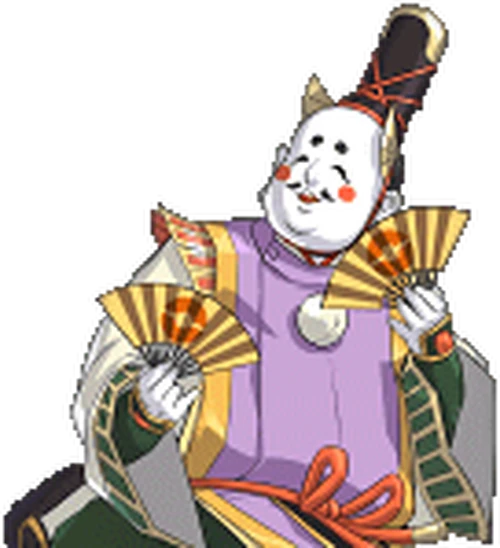
In the Pokémon Conquest World, this may be another reason why Psychics are scared of Bugs…
Their resistance to Fighting types can also be explained by considering the strength of bugs. Ants are commonly said to be able to carry up to ten times their own body weight. Fleas jump higher than any other mammal in relation to their own size by far. And so forth. Consider now bugs with these similar measures of strength that are the size of people, and with Pokémon powers to top it off. A resistance to physical strength, or Fighting type moves, then makes more sense. But Fighting types aren’t innately going to be scared of a bug and rely on physical prowess themselves, so hence they resist each other. Rock however tend to be tougher than a bug’s exoskeleton, hence the Rock type is super-effective against Bug.
One however doesn’t make much sense, and that’s Bug’s relation with Poison types. You would think that given the amount of products used to kill insects that Poison should be super effective against them, but this is not the case, at least following the first generation, where they were super effective against each other. Maybe these Bugs have built up a resistance to Poison types (like how some bugs become resistant to insecticides). But they can’t really do much to Poison types themselves, hence Poison’s resistance of Bugs.
Poison types
Arguably, most things should be weak to Poison – not just plants. Fish, for example, would be unable to survive Poison attacks. Alas, in the world of Pokémon only Grass and now Fairies have a weakness to the type. Perhaps the prevalence of the move Toxic which can badly poison any Pokémon bar those of the Steel type (and other Poison types) is the balancing factor for this. Enough water may filter out poison from one’s system anyway. If you’re sick, you try to drink a lot of water to get toxins and germs out of your body after all!
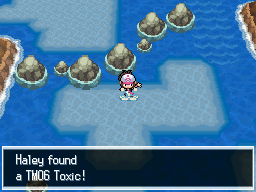
Given nearly any Pokémon can learn this too, it may explain why not everything suffers greatly from Poison types…Ew.
Ground beating Poison can be a weird one for people, but sand (for instance, limestone sand) typically will neutralise acids, so there’s some scientific basis for that. The advantages Psychic types have over Poison types relies on mental willpower – that can at times defy disease or indeed Poison. And if a Pokémon has a supply of poison in itself and suddenly loses control of its own body and the ability to maintain it… it will likely fall foul of its own weapon. At the very least, if the Pokémon is still immune to its own toxins, a placebo effect could be suggested. One can also view it as Psychics representing knowledge or intelligence, something that has lead to many antidotes created to treat poisoning.
Psychic types shouldn’t bend spoons
Psychic was an overpowered type in the original games; so much so that two types were introduced in the second generation to negate its power. But Steel types resisting Psychic type moves strikes one as an odd choice beyond that. The type was very dependent on physical defence, yet Psychic was a special attacking type, with Steel being generally poor on that side. What did metal have to protect itself from Psychic types? Dark types and Ghost types are no longer resisted by the Steel type as well in a recent nerf (which makes sense – there’s not much to suggest a Pokémon covered in metal would be better equipped to protect themselves against Ghosts, or the Dark type’s fighting style). Yet Psychic remains an ineffective attacking type.
This was even stranger when you looked at Pokémon like Alakazam happily bending spoons like nobody’s business. Perhaps the reasoning is just that it is going to be significantly harder to manipulate something as hard as metal than say Rock types, or Grass types, but Alakazam suggests it’s not that hard…

Alakazam is always well prepared for dessert.
Of course, Steel types had really been introduced to help balance the typing system along with Dark types – namely by nerfing the power of Psychic types. So maybe this was an oversight with a purpose, but that doesn’t make it any less satisfying. Speaking of introducing new types to balance the typing system though…
All about Fairies
The Fairy type was one of the advertised features of the X&Y games, the first of the 6th generation and the first for Pokémon main games on the 3DS system. Officially, they were brought in to balance the Dragon type first and foremost, something acknowledged by the development team in presentations. Giving Poison types something else to lord over is another nice bonus too. But there’s a fair bit of justification for all of its relationships with other types.
But it does require you to consider folklore of fairies outside of the more modern, Western representations of fairies. Don’t just think of Tinkerbell or the like. Rather, look back at old legends, where creatures that would classify as fairies or faeries ranged from angels to trolls. Fairies furthermore wielded magic, and that was often considered to be able, and even relied upon, to defeat Dragons – perhaps being immune to them in Pokémon is surprising, but it does fit it rather well that they have such a strong dominance over them. If Water and Fire can’t do much to Dragon’s, why not another sort of mystical power that has no ties to such elements? And as they often rely on mystical powers, it’s something that would be able to overcome sheer brawn (Fighting Types), as well as the nasty tactics Dark Types can get up to.
As for weaknesses? Not only do Steel types potentially represent manmade objects, something that may give trouble to beings of natural forces such as Fairies, but cold iron was thought to be capable of slaying fairy creatures. Poison would be deadly to something so closely tied to nature as well. Fire meanwhile is not easily tamed – that may well be why it resists Fairy-type attacks.
The weirdest relationship that does exist is that Pokémon of the Fairy type resist Bug types. Maybe it’s another one of those natural ties things – Fairies would be well accustomed to living in places where Bugs tend to thrive after all. This is a bit of a stretch, but one possibly questionable relation for a type introduced after four generations of a largely unchanged typing system – which had seventeen types prior – is not bad.
The Fighting/Psychic/Dark Triangle
Last, but certainly not least, is an examination of the second most popular trio of types in the fandom, following the Water/Fire/Grass triangle. A lot of people tend to throw this around as a potential theme for the Starter Pokémon every new generation, and this even became a feature in 6th gen, albeit in addition to the tradition rather than a replacement. But why does Fighting beat Dark, and why does Dark enjoy a sheer immunity to Psychic types?
The best way to understand this is to look at what the Dark type really is, and that is helped by looking at the Japanese name for the type, あく. This can be translated to Evil, rather than Dark. Further and more conclusive clues come from the Dark type moves. They don’t represent using dark powers or the like, but rather using evil, deceptive, or underhanded tactics.
Let’s go through them. Faint Attack (now known as Feint Attack in 6th gen) – the Pokémon pretends to be fainted before attacking. Bite and Crunch – attacking with their teeth. Foul Play – uses the opponent’s own attack stat to deal damage. Sucker Punch – attacks the opponent first if they were attacking. Thief – steals the opponent’s item. Snatch – steals stat-up boosts from the opponent’s move. Taunt – abuses a target into attacking them. Beat Up – literally gets other Pokémon in the party to join in and attack the Pokémon. And perhaps the ‘Darkest’ of all – Night Slash, or known in Japanese as ‘つじぎり’, translating as ‘Crossroad Killing’.
Why is it called that, you ask? Why, it’s based on the way some samurai would test their swords back in feudal Japan. This act was known as Tsujigiri. And what better way to test a sword used for killing by, well, killing someone? Say, someone innocent walking by a crossroad where you could hide by, in the middle of the night? Not a bad reason for that move to come with a critical hit rate improvement, certainly.

No, Absol! What are you doing!?
Co-incidentally, this may well be why we are yet to see a Light type as the counterpart to Dark type, as the assumption of what Dark types are is incorrect. There was even the ‘perfect time’ to introduce such a type in 5th gen, what with Reshiram and Zekrom being the box legendaries, the game’s theme of Ying and Yang, and so forth. But that never eventuated, because arguably we already have a ‘Light’ type to oppose Dark types.
Psychics fall prey to Dark types not because they have special powers to counteract their own. Rather, it’s because they are unable to cope with the host of dirty tricks and tactics Dark type Pokémon will stoop to using. So what does this mean for Fighting types? Well, all of their attacks are, by comparison to Dark type moves, more fair and honourable (unless you want to interpret Low Kick that way…). Karate Chop, named after a style which teaches to avoid fighting when possible. Similar other moves also come from reputable styles, such as Low Sweep and Circle Throw. And look at the entries for many of the Fighting type Pokémon, which talks about them dedicating much of their time on practising their attacks.
So the triangle really goes like this: brain (Psychics) beats brawn (Fighting types). Dirty tricks (Dark) beats the Psychic types who cannot cope with such tactics – but it’s the pure, honourable arts Fighting Types practise that can overcome the Dark type way of fighting. If you like, it’s Good beating Evil.
If you have any other explanations of your own, or wonder about any other type matches that don’t make sense, let us know about them in the comments!
Written by bobandbill
Edited by An-chan, Bay Alexison, Hoenn, Richard Fightmaster and Slayr231
